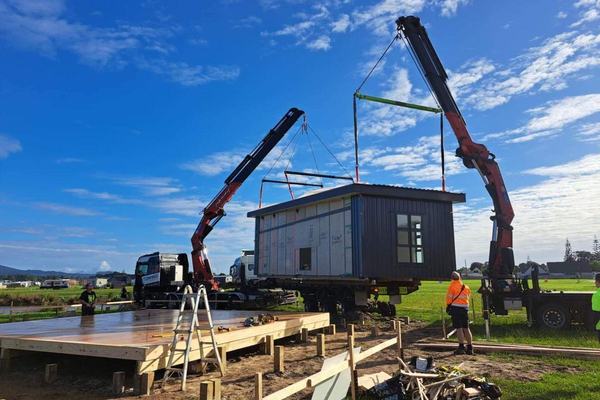
Seeing a home arrive at its site is an exciting milestone, but delivery is not the same as move-in. A successful project depends on the home, land, transport plan, foundation, utilities, local inspections, and completion work coming together in the right order.
The exact process varies by manufacturer, model, contract, and location. Use the stages below to ask better questions and make sure each handoff has a named owner.
Stage 1: Confirm the home and project scope
Before scheduling production or delivery, verify the model, configuration, dimensions, finish choices, included equipment, and written exclusions. Ask what arrives factory-complete and which parts will be finished by local contractors. Confirm the applicable construction documentation and warranty terms for the exact home.
Review the purchase agreement for payment milestones, changes, delivery assumptions, storage or delay costs, and what happens if access or site readiness is not approved. Keep the final plan set and contact list accessible to the supplier, site contractor, transporter, and local authorities.
Stage 2: Prepare and approve the site
Complete surveys, engineering, permits, grading, drainage, foundation work, and any required inspections before the scheduled delivery window. Confirm utility routes and connection points. Ask the supplier or installer to provide written site-readiness criteria and schedule a pre-delivery review if one is available.
Verify that the driveway, staging area, and setting area can handle the expected vehicles and equipment. Remove obstacles only after confirming property boundaries and utility locations. A site that is technically buildable may still need additional access work for transport.
Stage 3: Plan the route and delivery day
The delivery team should review vehicle dimensions, route restrictions, turning clearances, overhead wires, road conditions, bridge limits, and any permits or escorts required. Confirm the delivery date, weather contingency, unloading method, crew responsibilities, and a contact who can make decisions on site.
Ask what must be clear on the property and who will manage public-road coordination. Keep neighbors informed where access or temporary traffic control may affect them. The supplier should confirm that the route and setting approach work for the specific home, not simply for a similar project elsewhere.
Stage 4: Set the home and complete connections
Depending on the design, a crane or other setting equipment may place the home or its sections on the prepared foundation. The crew aligns and secures the structure according to the approved plans. After placement, qualified trades complete the connections and finishing work assigned to them by the contract.
That work may include joining sections, weatherproofing, stairs or access, utility connections, interior or exterior finishes, and commissioning of equipment. Ask which items are part of the supplier’s scope and which belong to the local contractor. Do not treat a visual placement as proof that every system is connected or approved for occupancy.
Stage 5: Complete inspections and handover
Arrange required inspections with the local authority and utility providers. Resolve any corrections, collect certificates and warranty documents, review operating instructions, and make a final walkthrough with the responsible parties. Confirm the process for reporting defects and the contact for post-installation questions.
Before move-in, verify that utilities are active, safety systems are working, access is complete, and the approvals required for occupancy have been issued. Keep copies of the approved plans, permits, inspection records, product documentation, and contractor invoices with your home records.
A practical delivery-day checklist
- The foundation and access are signed off as ready by the responsible professionals.
- Delivery route, permits, equipment, schedule, and weather contingency are confirmed.
- Supplier, installer, transporter, site contractor, and owner responsibilities are clear.
- Utility connections and required inspections are scheduled with the right parties.
- There is a written plan for delays, damage, missing items, and unfinished work.
Martin Boxabl’s home buying page describes the broader path from browsing to delivery, while the gallery offers a look at home designs. For a project-specific conversation, contact Martin Boxabl and ask which delivery and completion responsibilities apply to the model you are considering.